
Introduction
Japanese history from the Nara period to the Nanbokuchō era represents one of the most dynamic and transformative chapters in the development of Japan as a nation. During this long historical timeline, Japan evolved from a centralized ritsuryō government modeled after Tang China into a society shaped by uniquely Japanese political systems, cultural achievements, and emerging warrior authority. The early focus of Japanese history in the Nara period centered on state-building, Buddhism, and legal structure, while the Heian period became the golden age of court culture, literature, and refined aesthetics such as waka poetry and The Tale of Genji. However, as aristocratic influence declined, military clans rose to power, defining the next phase of Japanese history.
This gradual shift from imperial aristocracy to warrior rule intensified during the Kamakura and Nanbokuchō periods, where samurai leadership, new political structures, and civil conflict ultimately reshaped the foundation of governance. By the end of the Nanbokuchō era, Japan had transitioned into a society governed by the samurai class, marking a major turning point in Japanese history that paved the way toward later medieval and early modern developments.
Nara Period (710–794)
Overview
The Nara Period (710–794) is one of the most significant eras in Japanese history, marking the establishment of an organized centralized state, the rise of Buddhism as a political force, and the formation of lasting cultural foundations. During this age of Ancient Japan, the imperial court at Heijō-kyō (Nara) adopted complex institutions influenced by Tang China, shaping governance, religion, and literature for centuries.
① Social and Cultural Characteristics
- Establishment of the Ritsuryō System
The Nara Period represents the full development of the Ritsuryō System, a cornerstone of early Japanese state formation. This legal and administrative code—deeply inspired by Tang China—structured governance across the entire country. Core administrative institutions included:- Daijō-kan (Council of State) — responsible for administration
- Jingikan (Department of Divinities) — overseeing rituals and Shinto affairs
This centralized system became one of the defining early political frameworks in Japanese history.
- Population Registry (Kogo-nenjaku & Koshin-nenjaku)
The Kogo-nenjaku (670) and Koshin-nenjaku (690) were the oldest nationwide population registers in Japanese history. They were created to accurately allocate taxes (so, yō, chō) and military service. As a result, the state gained the ability to centrally manage demographic and labor information—“who lives where, and how much tax and labor they must provide.”This marked the first institutionalization of population management in Japanese history and strengthened the foundations of a centralized state. - Handen Shūju System (Land Allotment System)
The Handen Shūju system distributed agricultural land, called kubunden, to all people every six years, and required its return upon death. In exchange for cultivating this state-owned land, farmers were obligated to pay so, yō, chō taxes, forming the fiscal foundation of the government.
As a result, Japan’s centralized governance grew stronger, while farmers lived under the public land / public people (kōchi kōmin) system, tied to their allotted land. - Buddhism as a State Religion
The Great Buddha (Vairocana) at Tōdai-ji was commissioned by Emperor Shōmu in 745, with its eye-opening ceremony held in 752. It was the largest public project ever undertaken in ancient Japan, mobilizing national resources and labor on an unprecedented scale.
The project required massive quantities of bronze and gold, long-distance transport from the provinces, and the participation of artisans from across the country.
Purpose:- To address widespread social anxiety—epidemics, famine, and uprisings.
- To use Buddhism as a unifying symbol of national protection.
- To strengthen central authority over the provinces.
Results:
The project created Japan’s first truly nationwide public works initiative, though it imposed a heavy fiscal burden and drained national resources.Nevertheless, its symbolic impact was profound, greatly enhancing Buddhism’s social influence during the Nara period. Tōdai-ji later became a central institution of Japanese Buddhism and contributed significantly to the development of Japanese culture. The Great Buddha (Vairocana) at Tōdai-ji was commissioned by Emperor Shōmu in 745, with its eye-opening ceremony held in 752. It was the largest public project ever undertaken in ancient Japan, mobilizing national resources and labor on an unprecedented scale. The project required massive quantities of bronze and gold, long-distance transport from the provinces, and the participation of artisans from across the country.
- Political Intervention by Buddhist Monks: The Case of Dōkyō
In the late Nara period, the monk Dōkyō of the Hossō sect rose rapidly through political ranks after gaining the trust of Empress Shōtoku. He was promoted with unusual speed—from shōsōzu, to daisōzu, and eventually to Daijō-daijin Zenji, placing him near the position of emperor.
This made Dōkyō the symbolic figure of Buddhist political intervention. Purpose (from the perspectives of both sides):- Dōkyō: Aimed to realize an ideal Buddhist-inspired governance
- Empress Shōtoku: Saw Dōkyō as a highly trusted advisor who helped her maintain political stability while counterbalancing aristocratic factions
Result:
Dōkyō’s attempt to influence imperial succession—highlighted by the Usa Hachiman Oracle Incident—provoked strong backlash from the Fujiwara clan and other aristocrats. After Empress Shōtoku’s death, Dōkyō was exiled, and Japan effectively adopted a policy of prohibiting direct political involvement by monks. This shaped future governance: Emperor Kanmu in the Heian period took deliberate steps to control temple authority and separate religious institutions from political power, such as through the regulation of Enryaku-ji on Mount Hiei.
- International Exchange (Kentōshi Missions to Tang China)
During the Nara period, Japan frequently dispatched Kentōshi embassies to Tang China in order
to adopt the empire’s advanced political systems, religious traditions, and cultural achievements. Students, monks, and technical specialists were sent to China, bringing back knowledge in fields such as law, military structure, architecture, medicine, Buddhism, and calendrical science.
One of the most symbolic figures in this process was Ganjin (Jianzhen).Purpose:- To establish a model for state-building by importing Tang’s institutions.
- To implement the Tang-style ritsuryō system and strengthen Japan’s centralized governance.
- To elevate Buddhism as a spiritual foundation for state administration. (chingo kokka, “protecting the nation through Buddhism”)
- To introduce Chinese architecture, city planning, and artistic culture, which were applied to the construction of capitals and temples.
Ganjin’s arrival in Japan aimed specifically at building a correct Buddhist institutional framework. At the time, the training of monks and the enforcement of precepts in Japan were inadequate. Ganjin’s teachings greatly contributed to establishing a formal monk-ordination system.
Results:
The Kentōshi missions fundamentally transformed Japanese society:- Japan completed its own ritsuryō state by adopting Tang systems such as population registers, land allotment, and central bureaucratic organization.
- Urban planning (including the grid-pattern design of Heijō-kyō), architecture, and craftsmanship developed rapidly.
- Tang-style culture—clothing, literature, music, and calendrical science—became the foundation of Japanese civilization.
Ganjin, despite losing his eyesight during repeated attempts to cross the sea, successfully reached Japan. He transmitted proper Buddhist precepts, established the Tōdai-ji ordination platform, and greatly accelerated the institutionalization of Japanese Buddhism.
The cultural maturation of the Nara period cannot be understood without recognizing the profound role played by the Kentōshi missions. - Emergence of Literature (Kojiki, Nihon Shoki, Man’yōshū)
During the Nara period, Japan compiled its first state-sponsored historical texts—Kojiki (712) and Nihon Shoki (720)—and produced its earliest anthology of poetry, the Man’yōshū. These works mark the beginning of Japanese literary history and had a profound impact on later cultural development. Their primary purposes were as follows:- Establishing Political Legitimacy (Kojiki, Nihon Shoki)
The Yamato government sought to clarify the legitimacy of its rule by organizing official records that articulated the imperial lineage and the rightful historical continuity of the Japanese state. This was a political project to establish a state ideology centered on the emperor, ensuring ideological unity across the emerging centralized government. - Establishing a National Literary Culture (Man’yōshū)
The Man’yōshū collected poems from a wide range of social classes—from emperors to farmers—and aimed to establish “emotional expression in the Japanese language,” and solidify waka as a distinct cultural form. In contrast to the previously Chinese-language–dominated intellectual culture, the Man’yōshū played a crucial role in rooting Japanese-language expression in society. - Cultural Impact of These Literary Works
■ These texts profoundly shaped Japanese civilization in several ways:
An emperor-centered historical worldview became the state’s official ideology, promoting national unity.
■ The culture of waka became the core of aristocratic education and led directly to later works such as the Kokin Wakashū and The Tale of Genji.
Japanese expressive culture developed significantly, contributing to the formation of a unique cultural identity.
■ Kojiki and Nihon Shoki later became foundational sources for Shinto mythology and the development of kokugaku (National Learning).
- Establishing Political Legitimacy (Kojiki, Nihon Shoki)
In summary, the historical chronicles and poetry anthology created during this period formed the foundations of both Japan’s state ideology and its literary culture.
② Symbolic Events and Figures
- Emperor Shōmu
He idealized national stability through Buddhism and ordered the construction of the Great Buddha. Amid continuous natural disasters and epidemics, he used Buddhism as a symbol of national prayer. - Empress Kōmyō
She established the Seyakuin (public medical facility) and Hidenin (welfare facility).
These institutions became the prototype for state-level systems of caring for the vulnerable. - Dōkyō
He symbolizes the dangers of the fusion between religious authority and political power.
His influence led to the later strengthening of the sōgō system (regulations for Buddhist clergy) and tighter control over temples. - Ganjin (Jianzhen)
Despite five failed attempts and going blind, he succeeded in coming to Japan.
He transmitted Buddhist precepts, greatly improving the discipline and quality of the clergy. Tōshōdaiji, which he founded, remains one of Japan’s most treasured architectural sites.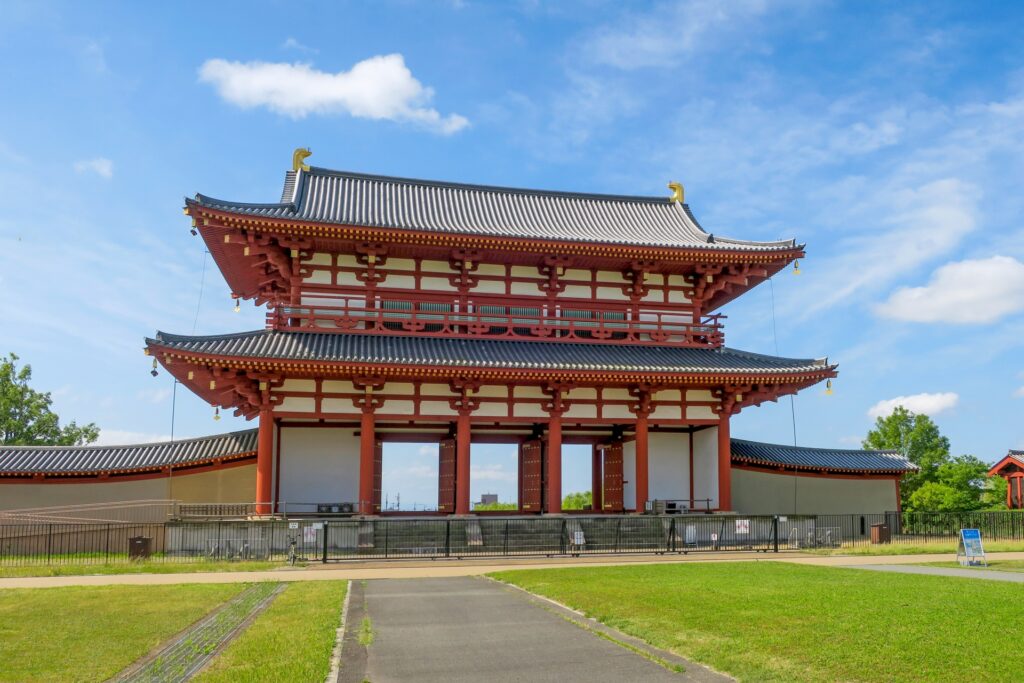
Heian Period (794–1185)
Overview
The Heian period marks a defining era in Japanese history, characterized by the rise of aristocratic society, the establishment of regency governance under the Fujiwara clan, and the flourishing of Japanese court culture (Kokufū Culture). This period witnessed the development of uniquely Japanese art, architecture, and literature, alongside the gradual emergence of the warrior class in the provinces. In the broader context of Japanese History, the Heian period laid the foundations for medieval political and cultural structures that shaped subsequent eras, including the Kamakura shogunate.
① Social and Cultural Characteristics
- Rise of the Regent Government and the Aristocratic Society: Regency Government
(Sekkan Politics by the Fujiwara Clan)
In the mid-Heian period, the Fujiwara clan strengthened its political dominance by marrying their daughters into the imperial family and becoming maternal relatives of the emperors. Based on this relationship, they acted as Sesshō (regent for a child emperor) or Kampaku (chief advisor for an adult emperor), effectively monopolizing national governance. The purpose of this system was:- to influence imperial succession according to Fujiwara interests,
- to reduce the emperor’s role to a formal symbol.
- to ensure stable political control within the Fujiwara lineage.
In other words, the state was optimized into a Fujiwara-centered aristocratic society.
As regency rule continued, politics became “government for the nobles,” and culture concentrated in the capital, eventually flourishing. However, governance in the provinces declined, contributing to the rise of the warrior class. Thus, while aristocratic culture flourished in the capital, the countryside experienced deteriorating security and weakened defense—a foundation for national fragmentation.
- Formation of Kokufū Culture (Japanese Court Culture)
During the mid-Heian period, Japan shifted away from Tang-influenced culture and developed a court culture suited to its own climate, aesthetics, and social life, known as Kokufū Culture (Japanized court culture).
At the center of this development was the spread of kana scripts (hiragana and katakana), which enabled softer, more natural expression close to spoken Japanese, allowing new forms of literature and aesthetics to flourish. Background and Purposes Behind Kokufū Culture:- Need for a writing system that could express Japanese as it was spoken
Classical Chinese was prestigious but unsuitable for depicting daily life, emotions, and court relationships. Kana allowed direct expression of sentiment, atmosphere, and subtle psychological nuance. - Expression of court aesthetics and values through Japanese language
Themes such as seasonality, love, and emotional subtlety were best conveyed in kana. - Expansion of women’s cultural influence
Women typically did not receive a Chinese classical education, but kana enabled them to participate actively in literary creation. This contributed to a cultural flowering led by court women.
- Background and Purposes Behind Kokufū Culture:
- Need for a writing system that could express Japanese as it was spoken
Classical Chinese was prestigious but unsuitable for depicting daily life, emotions, and court relationships. Kana allowed direct expression of sentiment, atmosphere, and subtle psychological nuance. - Expression of court aesthetics and values through Japanese language
Themes such as seasonality, love, and emotional subtlety were best conveyed in kana. - Expansion of women’s cultural influence
Women typically did not receive a Chinese classical education, but kana enabled them to participate actively in literary creation. This contributed to a cultural flowering led by court women.
- Need for a writing system that could express Japanese as it was spoken
- Representative Works Born from Kokufū Culture:
- The Tale of Genji
- The world’s first full-length novel.
- Depicts romance, politics, human relationships, and court life with great sophistication.
- Clearly expresses the uniquely Japanese aesthetic of mono no aware, symbolizing Kokufū culture.
- The Pillow Book
- Essays describing court life, seasonal beauty, and daily observations.
- Expresses Japanese sensitivity and aesthetic judgment, forming the basis of later essay literature.
- The Tale of Genji
- Development of Kyoto’s Art and Architecture
In Heian-period Kyoto, aristocratic culture matured and produced Shinden-zukuri, a uniquely Japanese style of court architecture. This style arranged the main hall, subsidiary buildings, corridors, and gardens across a wide estate, emphasizing harmony with nature.
Shinden-zukuri later became the foundation of Japanese architectural tradition.
- Background Factors Behind the Development of Shinden-zukuri:
- Demand for a courtly lifestyle centered on seasonal appreciation
Palatial gardens and ponds were designed for enjoying poetry, moon-viewing, and nature. - Need to separate spaces for ceremonies, governance, and banquets
As court rituals developed, large halls, corridors, and gardens became essential ceremonial settings. - Shift away from Tang culture and the search for a Japanese architectural identity
As the Tang dynasty declined, styles more suited to the Japanese climate and aesthetics were sought. Long-Term Influence:- Established the Japanese architectural principles of openness and integration with nature.
- Became the origin of later shoin-zukuri and sukiya-zukuri.
- Encouraged the development of Pure Land gardens and pond gardens, shaping the prototype of Japanese gardens.
- Played a central role in Kyoto’s cultural golden age. Shinden-zukuri, therefore, embodied the Japanese aesthetic ideal of “spaces that harmonize with nature.”
- Rise of the Warrior Class
In the late Heian period, worsening provincial security and the expansion of estates (shōen) empowered local warrior bands.
Among them, the Taira (Heike) and Minamoto (Genji) clans grew into major military forces, eventually challenging aristocratic rule. Reasons for the Rise of the Warriors:
- Need for military forces capable of maintaining security
As court control weakened, the government could no longer respond to local disputes or banditry. - Land management was delegated by aristocratic and temple estate owners
Warriors served as armed estate managers, increasing their authority and administrative power. - Strengthening of local warrior organizations through kinship and regional networks
These bands gradually developed autonomy and grew into military coalitions.
- Historical Consequences:
- The Taira and Minamoto clans entered central politics backed by military power and landholdings.
- The Taira regime emerged → Genpei War → Rise of Minamoto no Yoritomo.
- Collapse of aristocratic rule and beginning of warrior rule under the Kamakura shogunate.
- The warriors became the center of military and administrative power, marking the start of medieval Japan.
- Need for military forces capable of maintaining security
- Demand for a courtly lifestyle centered on seasonal appreciation
- Need for a writing system that could express Japanese as it was spoken
This transformation was not merely the rise of a military faction but a major turning point that shifted Japan into a warrior-led society.
② Symbolic Events and Key Figures
- Murasaki Shikibu
She perfected literary expression in hiragana and authored the world’s oldest full-length novel, The Tale of Genji.
Her sophisticated psychological depictions of aristocratic life continue to influence modern literature. - Sei Shōnagon
In The Pillow Book, she articulated the aesthetic sensibilities and intellectual culture of the Heian court. Her observations serve as an invaluable record of everyday aristocratic life. - The Rebellions of Taira no Masakado and Fujiwara no Sumitomo
These uprisings symbolized the weakening of central control and the political rise of provincial warriors. They formed a critical prelude to the eventual establishment of warrior governments. - Cloistered Rule under Emperor Shirakawa
His insei (cloistered government) marked a historic turning point in which political authority emerged outside the reigning emperor. This created a multi-layered structure within the imperial system.
 (Cite:Wikipedia)
Kamakura Period (1185–1333)
Overview
The Kamakura period represents a transformative era in Japanese history, marking the shift from imperial court-centered rule to a military government led by the samurai. During this period, the Kamakura shogunate established enduring institutions of warrior governance, implemented legal codes for the samurai class, and oversaw significant social and religious changes. The era is also notable for foreign threats such as the Mongol invasions and the rise of new Buddhist movements, all of which shaped medieval Japanese society.
② Social and Cultural Characteristics
- Institutionalization of the Warrior Government
During the Kamakura period, Japan established its first military government (bakufu) led by the samurai class.
In 1185, Minamoto no Yoritomo effectively secured command over warriors across the country, and in 1192, he was appointed Sei-i Taishōgun, formally founding the Kamakura shogunate.
This marked a major shift from the previous political order dominated by the emperor and the court aristocracy. The samurai assumed responsibility for law enforcement, land administration, and military affairs, resulting in the institutionalization of the warrior government. - The “Loyalty–Reward” System (Gokenin Relationship)
The Kamakura bakufu established a reciprocal, contract-like relationship between the shogun and his vassals (gokenin) known as “on” (rewards) and “hōkō” (service).
This system was designed to stabilize samurai rule:- The shogun guaranteed the protection, confirmation, and granting of estates to his vassals (on).
- In return, the vassals provided military service, guarded Kyoto, and fulfilled various duties (hōkō).
This mutual-interest structure created a stable political foundation and fostered norms of loyalty and conduct characteristic of samurai society.
It became the basis of what would later be recognized as bushidō, forming the framework that sustained order in medieval Japan. - Establishment of Provincial Governors: Shugo and Jitō
To strengthen regional governance, the Kamakura shogunate appointed shugo (military governors) and jitō (estate stewards) throughout the country. This transformed Japan from a court-centered political structure to one dominated by warrior authority.The bakufu sought to:- Maintain public order
- Collect taxes more efficiently
- Mobilize military forces across provinces
By assigning samurai with practical administrative powers in each region, the shogunate gradually expanded its direct control.
As a result, the authority of the imperial court weakened, and the warrior government secured a nationwide political base, marking a decisive shift in Japan’s political center of gravity toward the samurai. - Social Transformation Following the Mongol Invasions
In the late 13th century, the Mongol Empire (Yuan) launched two invasions of Japan.
The Kamakura shogunate mobilized samurai across the country to defend the realm—an unprecedented national crisis. The bakufu:- Summoned both gokenin and non-gokenin warriors
- Strengthened coastal defenses, including stone walls along Hakata Bay
- Coordinated national military operations
Although Japan repelled the invasions, the warriors gained little material reward because no new lands or spoils were obtained from the defeated enemy.
Unable to provide sufficient compensation, the shogunate’s finances deteriorated, and discontent grew among the samurai.
This widespread dissatisfaction became a major factor contributing to the eventual downfall of the Kamakura shogunate. - Spread of New Buddhist Movements (Hōnen, Shinran, Nichiren, Eisai, Dōgen)The Kamakura period witnessed the rise of new Buddhist schools, including:
- Pure Land movements (Hōnen, Shinran)
- Nichiren Buddhism (Nichiren)
- Zen traditions (Eisai, Dōgen)
Amid political instability, disasters, and social anxiety, people sought more immediate and accessible forms of salvation.
In contrast to earlier esoteric Buddhism centered on the aristocracy, these new movements offered simple and practical practices such as:- Recitation of Namu Amida Butsu (Pure Land)
- Chanting of the daimoku (Nichiren)
- Zazen meditation (Zen)
These teachings spread rapidly across all social classes, establishing Buddhism as a popular religion and profoundly influencing the spiritual life and culture of medieval Japan.
② Symbolic Events and Figures
- Minamoto no Yoritomo
Established the gokenin vassal system and designed the institutional framework of samurai governance, serving as the “architect” of the warrior government. - Hōjō Masako (“Nun Shogun”)
Played a decisive role in preserving the Kamakura shogunate by uniting the gokenin during the Jōkyū Rebellion. - Hōjō Yasutoki
Promulgated the Goseibai Shikimoku (the first codified samurai law), thereby organizing the legal system of the warrior class. The codification of laws enabled faster and more consistent dispute resolution. - Nichiren and Dōgen
Nichiren advocated a reformist doctrine centered on the absolute supremacy of the Lotus Sutra.
Dōgen systematized Zen practice through the doctrine of shikan taza (“just sitting”), leaving a profound and lasting impact on Japanese spiritual culture.
 (Cite: Wikipedia)
Nanboku-chō Period (1336–1392)
Overview
The Nanboku-chō period represents a turbulent era in Japanese history, characterized by the coexistence of the Northern and Southern Courts, prolonged civil war, and the decentralization of political authority. Following the fall of the Kamakura shogunate, Emperor Go-Daigo attempted to restore imperial rule through the Kenmu Restoration, but the rise of the Ashikaga shogunate led to a divided nation. This period shaped the evolution of samurai governance, military culture, and literature, leaving a lasting impact on the course of Japanese History and laying the foundations for the subsequent Muromachi and Sengoku periods.
① Social and Cultural Features
- Division and Civil War of the Northern and Southern Courts
After the fall of the Kamakura shogunate, Emperor Go-Daigo attempted to implement a “court-centered government” independent of the samurai, initiating the Kenmu Restoration. However, rapid institutional reforms and policies that underestimated the warrior class sparked opposition. When Ashikaga Takauji rebelled, the government collapsed, and disputes over imperial succession intensified. Emperor Go-Daigo aimed to end the medieval “samurai rule” and revive direct imperial governance, reconstructing a centralized state order reminiscent of ancient times. Following the conflict, Go-Daigo fled to Yoshino and established the Southern Court, while Ashikaga Takauji established the Northern Court in Kyoto. This marked the beginning of the Nanboku-chō period, the only era in Japanese history in which “two imperial courts coexisted,” leading to nearly half a century of nationwide civil war. - Reorganization of the Samurai and the Rise of Shugo Daimyō
Amid the Nanboku-chō conflicts, local military governors (shugo) strengthened both military and administrative powers and gradually transformed into shugo daimyō, consolidating local samurai under their command. This undermined the previous centralized governance structure, allowing regional powers to grow rapidly. Continuous warfare required the shugo to stabilize their territories and strengthen military mobilization. They organized local warriors into retainers to efficiently control their domains while demonstrating military achievements to the shogunate to enhance political status. By establishing the shugo ryōkoku sei (territorial administration under shugo authority), shugo acted as de facto feudal lords. This decentralization accelerated samurai autonomy and laid the foundation for the rise of Sengoku daimyō in the late 15th century, creating the preconditions for the Sengoku period. - Military Tales (Gunki Monogatari) and the Preservation of Japanese Literature
Despite the turmoil of the Nanboku-chō civil wars, military tales depicting samurai battles and heroic figures flourished. The representative work Taiheiki chronicled the Nanboku-chō conflicts, providing an important historical record that transmitted samurai values, political perspectives, and religious beliefs to later generations. Meanwhile, in the Southern Court, waka poetry culture persisted, preserving the spiritual essence of courtly culture. Military tales served both to record warfare and provide lessons for the future, while also celebrating loyalty, honor, and martial prowess. The Southern Court’s emphasis on waka maintained the tradition of court culture and reinforced cultural identity as a symbol of legitimacy. Military tales formed the foundation of samurai spiritual culture, influencing the later reevaluation of works like Heike Monogatari and the development of medieval Japanese literature. The continued practice of waka ensured that courtly aesthetics and literary expression survived, eventually shaping Japan’s unique cultural sensibilities that carried through the Muromachi and Sengoku periods into the early modern era.
② Symbolic Events and Figures
- Emperor Go-Daigo
Aimed to strengthen central authority, but his policies conflicted with samurai interests and ultimately failed. Became a symbol of the Southern Court’s claim to legitimacy. - Ashikaga Takauji
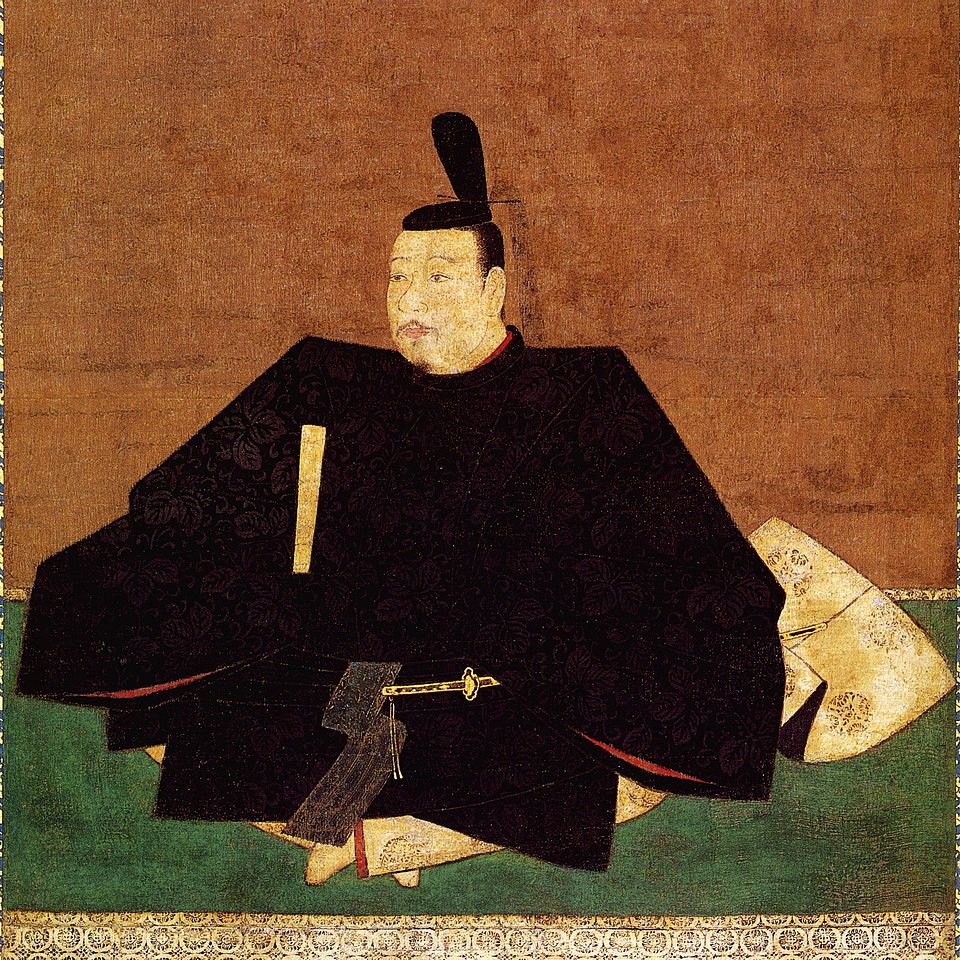
Gained the support of the samurai and established the Muromachi shogunate, inaugurating a new era of warrior-led governance. - Kusunoki Masashige
Fought valiantly as a loyalist of the Southern Court and is revered as an enduring symbol of loyalty and devotion. - Nitta Yoshisada
Key military commander responsible for the fall of the Kamakura shogunate and instrumental in overthrowing the Hōjō clan.
(Cite: Wikipedia)
Summary
From the Nara period’s establishment of a centralized ritsuryō government and Buddhist statecraft to the Heian court’s refined aristocratic culture and the eventual rise of samurai rule during the Kamakura and Nanbokuchō eras, this historical trajectory reflects a profound transformation in Japanese society. Through political restructuring, cultural innovation, and shifts in power from imperial nobles to warrior leaders, Japan evolved into a uniquely hybrid civilization—one shaped by Chinese influence yet increasingly defined by its own institutions, aesthetics, and governance. Understanding this evolution reveals how Japan’s identity, balancing tradition with adaptation, laid the foundations for its later medieval and early modern historical developments.
About Our Site & Hotel Recommendations
Our site provides detailed area-based sightseeing guides for Tokyo travel. We offer insights on culture, food, and events in neighborhoods such as Roppongi and Asakusa, helping visitors make the most of Tokyo Travel.
If you are looking for hotels near these events and attractions, check out the following:
◆ Shinjuku area hotels: here
◆ Shibuya area hotels: here
◆ Roppongi area hotels: here
◆ Asakusa area hotels: here
◆ Shinagawa area hotels: here
The Wonderful Travel Tips
Yuichi Yokoyama

コメント